
Emergency roofing
Emergency Roof Leak: What to Do Before You Call
A calm, practical checklist for active water entry, storm exposure, and urgent roof damage.
4 min read
Keep people safe first
Do not climb onto a wet, damaged, or unsafe roof. Move people away from active water entry and electrical risks if needed.
If you can safely place a bucket or move valuables away from the leak, do that before trying to diagnose the roof.
Collect useful information
Note when the leak started, where water is appearing, whether wind or storm damage happened recently, and whether visible roof material is missing.
Photos can help if they can be taken safely from inside the property or from the ground.
Call before relying on a form
Emergency roofing problems move faster than form submissions. Call Rise Roofing first when water is actively entering or the roof is exposed.
The estimate form can still be useful later for photos and written details.
Questions
Should I tarp the roof myself?
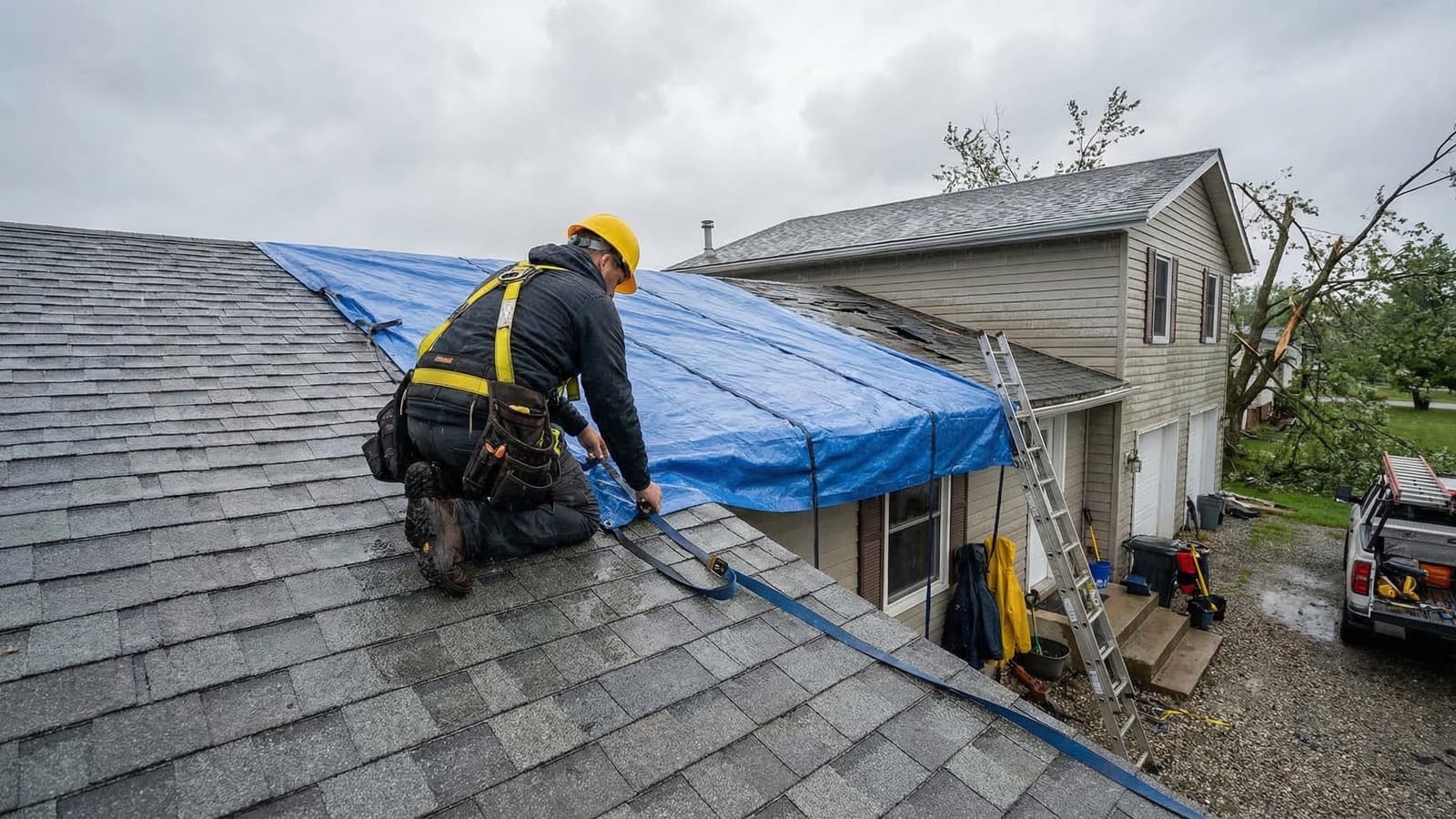
Avoid unsafe roof access. If temporary protection is needed, discuss it during the call so the next step is handled safely.
What counts as urgent roof damage?
Active leaks, exposed roof sections, fast-spreading stains, storm impact, and unsafe roof conditions should be treated as urgent.